




Choosing the right type of interest for your home loan is one of the biggest financial calls you’ll make. It shapes your monthly budget and the total cost of your home for years. In today’s shifting Canadian market, getting this decision right is more crucial than ever.
Interest is the cost of borrowing money. It adds up over time, significantly impacting what you ultimately repay. That’s why understanding your options before you secure a mortgage is non-negotiable for sound planning.
We act as your partner in this complex landscape. With over a decade of expertise, like that of our lead copywriter Kayla Cannon, we break down the details. Our goal is to shield your long-term financial interests with clear, actionable intelligence.
So, should you lock in your payment or let it move with the market? The answer depends on your personal risk tolerance, budget, and goals. Let’s navigate this together.
Key Takeaways
- Selecting between a fixed or variable interest type is a major financial commitment.
- Current economic conditions heavily influence which option may be more advantageous.
- The cost of borrowing (interest) directly affects your total repayment amount.
- A locked-in payment offers predictable stability for your budget.
- An adjustable payment can change, introducing potential risk and opportunity.
- Expert guidance is essential to analyze your specific situation in this complex market.
- Your choice should align with your financial goals and comfort with risk.
Understanding the Canadian Mortgage Landscape
Canada’s mortgage environment isn’t static—it’s a living system reacting to credit and economic shifts. To make a smart choice, you need a clear view of the forces at play right now.
We track these movements so you don’t have to navigate blind.
Current Market Conditions and Lending Trends
Lenders constantly adjust their appetite for risk. This changes how easily you can get a loan. Tighter credit means stricter rules. More available credit can mean better deals.
Your access to favourable interest rates hinges on these lending trends. We monitor them closely.

The Impact of Economic Climate on Loans
Big economic news directly shapes your mortgage cost. Strong growth data can push interest rates up. Weak signals might hold them down.
This is critical for adjustable loans. Their rates are tied to financial indices like the prime rate. When the economy heats up, these indices climb.
Volatility can be jarring. We’ve seen rates jump five percentage points quickly. This shakes the entire financial business.
Understanding this link protects your long-term borrowing costs.
| Market Force | How It Moves | Direct Impact on Your Loan |
|---|---|---|
| Bank of Canada Policy | Sets the benchmark for lender costs. | Dictates the baseline for all new interest offers. |
| Lender Credit Appetite | Changes with economic confidence. | Affects your approval odds and negotiated terms. |
| Economic Growth Data | Reports on GDP, employment, inflation. | Signals future rate direction, influencing lock-in decisions. |
| Global Financial Markets | Influences indices like SOFR. | Can cause overnight shifts in adjustable loan payments. |
This intelligence helps you see the road ahead. We connect these big-picture dots to your personal mortgage plan.
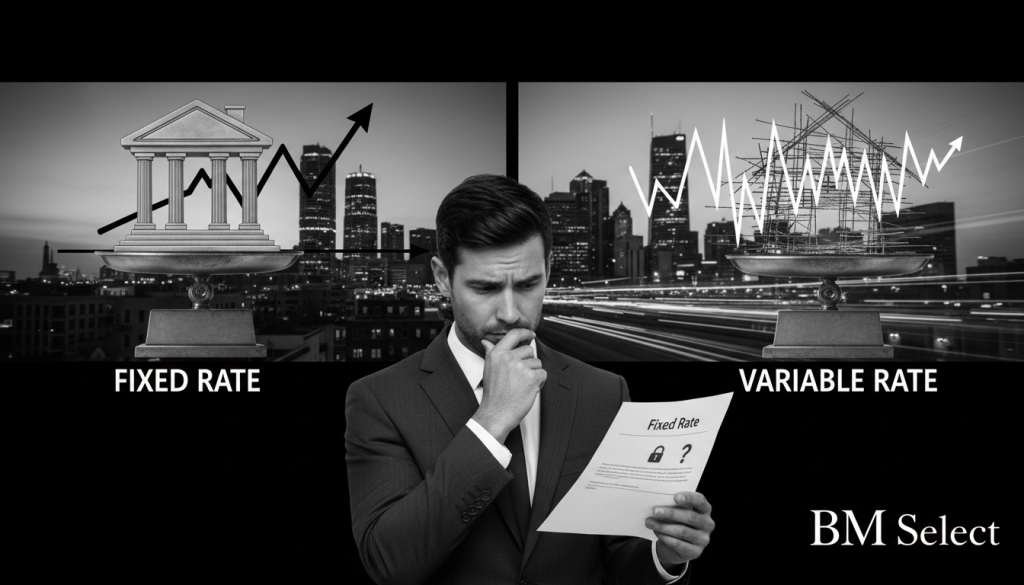
Exploring Fixed Rate Or Variable Rate?
The core choice in any borrowing plan boils down to locking in your cost or letting it fluctuate. This applies to your mortgage, but also to other major loans like student loans.
We help you navigate this fundamental decision. It’s about matching a loan’s structure to your financial personality.
Defining Fixed Rates: Stability and Predictability
A fixed interest rate stays the same for your entire loan term. Your monthly payment is a known, consistent number.
This predictability is a powerful budgeting tool. It shields you from surprise increases, which is why many borrowers prefer it.
Lenders like Sallie Mae offer this stability on private student loans with no origination fees. The principle is the same for any loan: you trade potential future savings for peace of mind today.
Understanding Variable Rates: Flexibility and Risk
A variable interest rate is tied to a financial index. Common indices are the prime rate or the SOFR.
When that index moves, your interest cost and payment can change. This introduces a level of uncertainty, or risk.
The potential upside? If market rates fall, your payments could decrease, saving you money over time. You must be comfortable with the possibility of increases.
| Feature | Fixed Rate Loan | Variable Rate Loan |
|---|---|---|
| Payment Stability | Monthly payment remains consistent for the loan term. | Payment can change when the underlying index moves. |
| Interest Rate Movement | Your interest cost is locked in and does not change. | The interest charged is tied to a financial index like the prime rate. |
| Risk Level | Protects you from market volatility; low risk. | Introduces uncertainty; risk level depends on market conditions. |
| Best For | Borrowers who value long-term budget certainty. | Those comfortable with potential savings if rates improve. |
Weighing these core features is your first step. Your comfort with payment stability versus potential savings guides the way.
Pros and Cons: Fixed Rate vs Variable Rate
The pros and cons of fixed and variable mortgages are not abstract concepts—they have real, tangible effects on your budget. We break down each option’s specific trade-offs so you can decide with confidence.
Benefits and Drawbacks of Fixed Interest Rates
A locked-in cost provides powerful peace of mind. Your payment never changes, shielding you from market volatility. This stability is the ultimate budgeting tool.
The trade-off? You may pay a higher interest cost upfront compared to an adjustable loan. Lenders charge this premium for the certainty they provide.
We advise crucial caution here. Breaking a closed mortgage contract triggers steep prepayment penalties. Selling or refinancing early can significantly impact your total loan interest.
Advantages and Risks of Variable Interest Rates
Adjustable payments often start lower than a locked-in rate. This initial discount offers potential savings, especially if you repay your loan quickly.
Some products, like Adjustable-Rate Mortgages (ARMs), begin with a short fixed period. After this, the variable interest structure takes effect.
You must weigh this benefit against the core risk. If the financial index rises, your payments will too. This can increase your overall mortgage costs over time.
The choice vs. variable options hinges on your timeline and comfort with potential payment changes.
How Changing Interest Rates Impact Your Loan
A shift in the broader financial climate doesn’t just make headlines—it directly alters the amount you pay each month on your home loan. We connect these dots for you.
When market interest conditions change, your mortgage costs follow. This isn’t theoretical. It’s a real force acting on your budget.
Effects of Market Fluctuations on Monthly Payments
If interest rates rise, your required monthly payments on an adjustable plan will climb. Even a small increase can strain your cash flow.
Canadian adjustable plans often have a fixed payment. But when rates go up, more of that payment goes to interest, not principal.
This leads to a critical trigger point. Hit it, and your payment no longer covers the interest charged. You must act immediately with your lender.
Strategies to Manage Rising Interest Rates
Protection starts with understanding your contract’s trigger mechanism. We help you identify this red line before you approach it.
Next, compare loans fixed at different terms. Locking in a cost can shield your money from future volatility. It’s a powerful defensive move.
Constant monitoring is key. Changes in the economic business environment affect your credit and total loan interest. We provide that vigilant oversight.
| Interest Rate Increase | Effect on Monthly Payment | Additional Annual Cost |
|---|---|---|
| +0.25% | ~$70 more per month | ~$840 |
| +0.50% | ~$140 more per month | ~$1,680 |
| +1.00% | ~$280 more per month | ~$3,360 |
Seeing the numbers makes the risk concrete. A proactive strategy turns market changes from a threat into a managed factor.
Tips to Choose the Right Mortgage Option for You
Your mortgage decision ultimately rests on aligning numbers with your life’s financial blueprint. This final step is deeply personal. It requires honest reflection and the right tools.
We guide you through this process. Our goal is to transform complex data into a clear path for your home.
Assessing Your Financial Goals and Risk Tolerance
Start by looking inward. What is your five-year plan? How much monthly payment fluctuation can your budget absorb?
Understanding your comfort with risk is non-negotiable. A stable budget often needs predictable loan costs. Other credit products, like those from Citi, also rely on your financial history.
This assessment isn’t just about your mortgage. It’s about your entire financial ecosystem, including credit cards and other debts.
Utilising Mortgage Calculators and Expert Advice
Next, put your scenario to the test. Use online calculators to see estimated payments. A student loan calculator demonstrates the principle well for different interest structures.
These tools reveal long-term savings or costs. They turn abstract rates into real money figures.
Never stop at the calculator. Comparing rates, fees, and terms is a critical final step before any application. The fine print matters.
This is where expert advice becomes invaluable. We help you interpret the numbers and navigate the final decision in a complex market.
Conclusion
Securing your home loan is more than a transaction—it’s a strategic move to protect your financial future. Your final decision is deeply personal, rooted in your unique goals and risk tolerance.
We’ve demonstrated how interest rates and economic conditions directly influence your long-term borrowing costs. Understanding this connection is crucial.
By weighing each structure’s advantages and drawbacks, you empower yourself to safeguard your home and savings. Utilize tools like mortgage calculators to compare loan terms and projected payments.
You don’t have to navigate this complex market alone. We provide the expert guidance and proactive intelligence required for a confident choice.