






News Feed
This is where the real updates live.
We deliver breaking Bank of Canada interest rate announcements the moment they’re released — before the headlines catch up and before the market fully reacts. From urgent rate changes and policy shifts to decisive mortgage strategies and high-level homeowner insights, everything you need is here.
No noise. No delays. No guesswork.
Just first-to-market intelligence — because in mortgages, timing is power.

This page is your archive of real-time mortgage updates and Breaking News alerts.
When rates shift, polaicies change, or new lending opportunities emerge, we break it down clearly — so you understand what it means and what to do next.
No jargon. No noise. Just timely insights that help you make smarter financial decisions.
The market doesn’t stand still — and neither should your strategy.

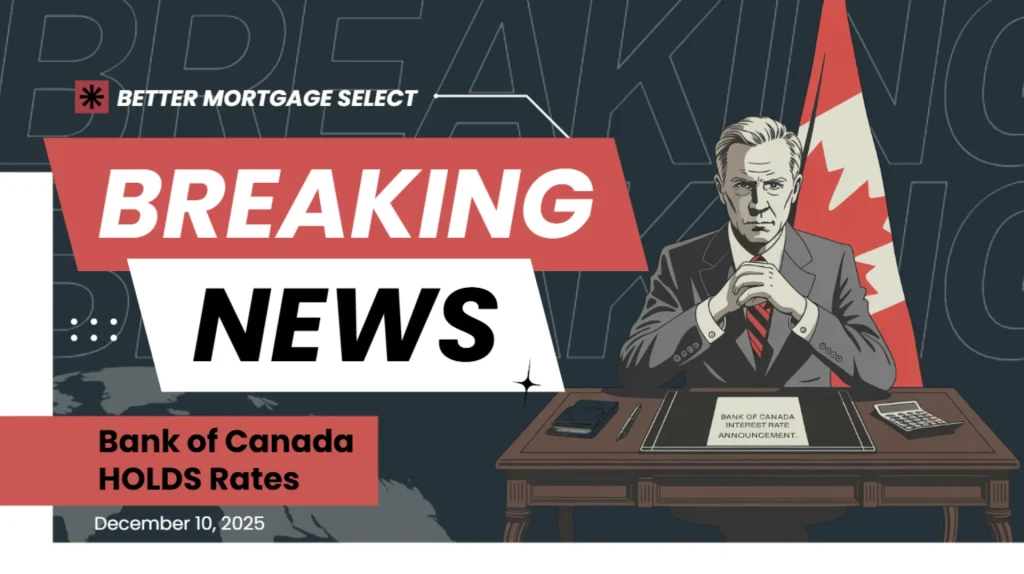
Following the Bank of Canada’s decision to hold rates, rising global tensions have pushed bond yields higher, putting upward pressure on fixed mortgage rates while variable rates remain the more stable, cost-effective option for now. In this shifting market, securing a rate hold and taking a strategic approach is key to protecting yourself and capitalizing on future opportunities.

In this update, we broke down the Bank of Canada’s decision to hold interest rates, explained how mixed inflation, employment, and growth data continue to keep policy makers on pause, and outlined what today’s fixed and variable rate environment means for mortgage strategy. We also highlighted the key economic dates that will shape rate decisions as 2026 unfolds.

This newsletter introduces the Build Up program by BM Select, a financing solution designed to help Canadian homeowners and investors offset high mortgage rates by adding rental units to their existing properties. Unlike high-interest private loans, this program offers bank-like interest rates and uses the property’s future appraised value to fund construction through interest-only draws.
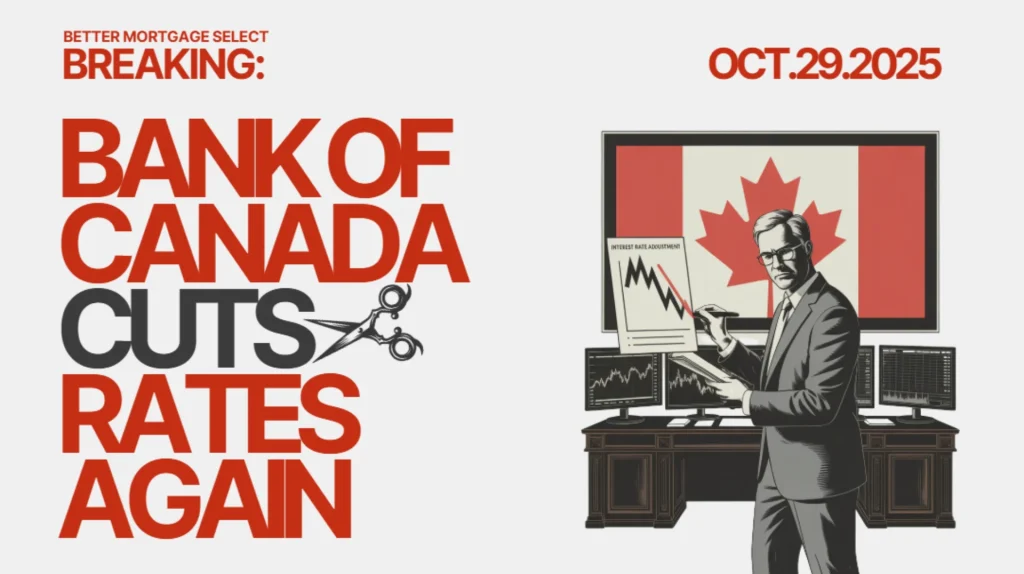
In this update, we share that the Bank of Canada has cut its key interest rate by 0.25%, as policymakers respond to ongoing economic weakness, softening GDP, rising unemployment, and trade pressures. We break down what this means for mortgage holders—such as lower variable mortgage costs and expectations for fixed rates to trend lower as markets adjust—and offer strategic guidance for buyers and renewals in the current rate environment. The summary also highlights tactical considerations for homeowners and investors looking to optimize their position as mortgage conditions evolve.
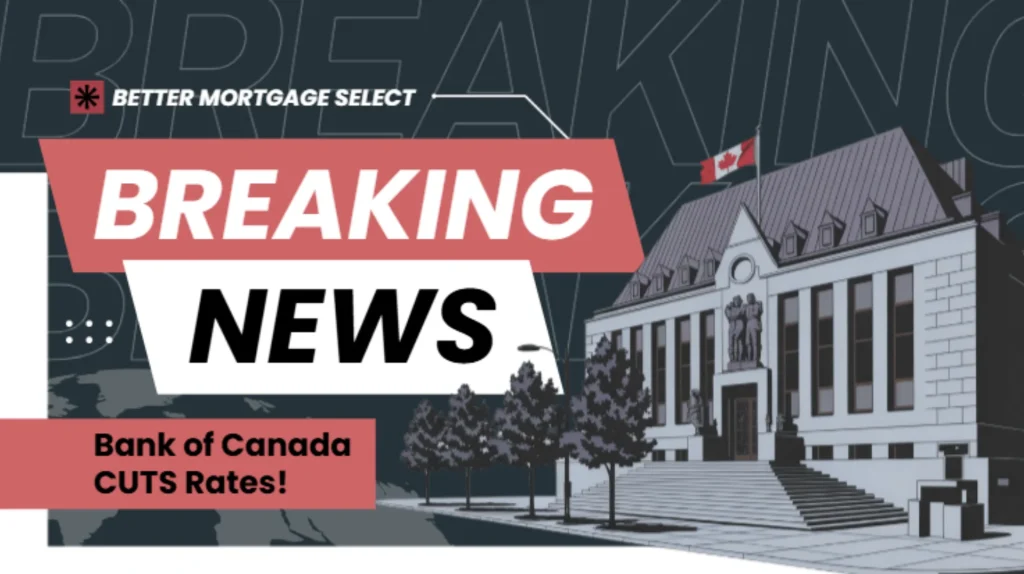
In this update, we reported that the Bank of Canada cut its key interest rate by 0.25%, lowering the prime rate and signaling the start of a new rate-cut cycle as economic indicators soften, including rising unemployment and easing inflation pressures. We explained what this rate cut means for borrowers — from lower variable mortgage costs to shifting fixed-rate opportunities — and highlighted expectations for further cuts later in the year, along with guidance on how homeowners and homebuyers can navigate the evolving mortgage landscape.

We announced an exclusive, limited-time fixed mortgage rate offer through BM Select — with a 3-year fixed rate as low as 3.64% for insured purchases and 3.94% for conventional loans — providing buyers a chance to increase their purchasing power, lower monthly payments, and lock in rate certainty. We explained the eligibility requirements, emphasized the time-sensitive nature of the offer, and highlighted how acting quickly can help homebuyers maximize budget flexibility and savings in the current market.
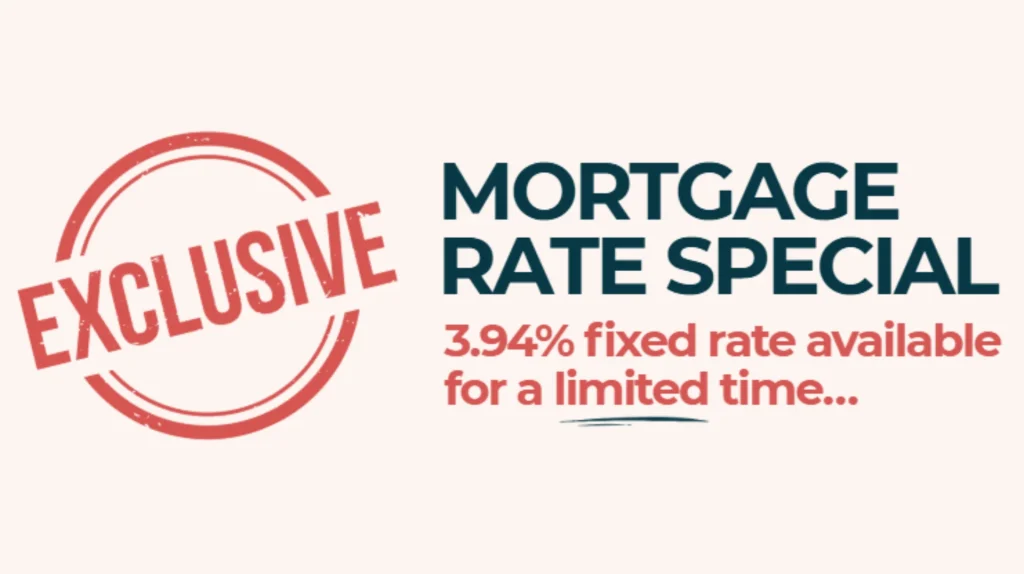
BM Select talks about a limited-time 3.94% 3-year fixed mortgage rate that BM Select has secured from a major bank, available for refinances and renewals on owner-occupied or secondary homes — offering significant monthly and long-term interest savings for borrowers ready to act quickly. We explain how this rare rate opportunity can lower payments, boost approval amounts, and help homeowners get ahead of upcoming renewals, while emphasizing that the offer is time-sensitive and likely to disappear soon.
In this update, we reported that the Bank of Canada chose to hold its key interest rate, keeping the prime rate unchanged and marking its third consecutive meeting without a change as core inflation remains above the central bank’s target range. We explain the economic factors behind the decision — including inflation trends and labour market data — and what it means for Canadian borrowers, with markets still pricing in future rate cuts likely in 2026. The summary also provides context on fixed vs. variable mortgage trends and offers guidance on how homeowners and buyers can position themselves strategically while navigating today’s rate environment.
In this update, we shared that the Bank of Canada opted to hold its key lending rate, keeping the prime rate unchanged after a series of cuts, as policymakers paused to closely monitor inflation and employment trends before making further decisions. We explained that this second consecutive pause reflects persistent core inflation and uneven economic signals, and we highlighted key data points markets will watch before the next rate meeting. The summary also provides insight into what this rate hold means for homeowners and borrowers — including the potential for future rate action — and offers guidance on how to navigate mortgage planning in the current environment.

This market update highlights that despite the Bank of Canada holding rates, we expect the spring and summer real estate market in Ontario to be the most active in years, driven by increased inventory, lower mortgage rates (including some in the high 3%–low 4% range), and renewed buyer opportunity. We also touch on how normalizing interest rates is helping borrowers refinance and eliminate high-interest debt, and we invite readers to upcoming expert discussions and resources to help them make the most of the current market trends.

In this update, we explained that the Bank of Canada has paused its streak of interest rate cuts after seven consecutive reductions, holding the prime rate steady as policymakers weigh concerns over a potential rise in core inflation and ongoing economic uncertainty. We broke down what this pause means for borrowers—including possible impacts on variable and fixed mortgage rates—and highlighted key upcoming data points and meeting dates that could influence the next move in monetary policy, along with strategic advice for homeowners and buyers navigating the current rate environment.

We explain how today’s lower interest rate environment makes refinancing to pay off high-interest consumer debt a smart financial move for many homeowners, turning equity into a tool to reduce overall interest costs and monthly payments. We walk through when refinancing makes sense, highlight the criteria that typically indicate strong savings potential, and share a real-life example showing how refinancing helped a homeowner cut debt and lock in a better rate — all while emphasizing that the decision should be based on clear numbers, not guesswork.

In this update, we shared that the Bank of Canada cut its key interest rate by another 0.25%, marking its seventh consecutive reduction and bringing the prime rate down, which boosts purchasing power for variable-rate borrowers and increases potential pre-approval amounts. We discussed the economic drivers behind the decision — including global tariff pressures and flat employment figures — and highlighted expectations for lower fixed mortgage rates as bond yields hit multi-year lows. The post also offered tactical guidance for both variable and fixed mortgage holders on exploring “lock-in” or conversion opportunities and pointed readers to upcoming market insights and resources.

Rising bond yields are pushing mortgage rates higher, breaking down the connection between government bonds and the rates lenders offer for fixed and variable mortgages. We highlight how this trend can impact borrowing costs, influence borrower strategy, and shift the relative value of locking in a rate versus staying variable, and we offer guidance on how buyers and homeowners can respond in the evolving rate environment.

The Bank of Canada cut its key rate by 0.25%, marking its sixth consecutive reduction and bringing total cuts to 2.00% since last June. The move lowers prime to 5.20%, slightly reduces the stress test, and increases purchasing power for buyers with pre-approvals. Attention now shifts to the March meeting, as potential U.S. tariffs and inflation risks could influence the Bank’s next decision.

In this update, we shared that the Bank of Canada delivered a 0.50% “jumbo” rate cut, continuing its easing cycle in response to rising unemployment and slowing economic growth. We outlined how this larger-than-usual reduction increases purchasing power, lowers borrowing costs, and could put downward pressure on both fixed and variable mortgage rates, while offering guidance on how homeowners and buyers can take advantage of the shifting rate environment.

In this update, we reported that the Bank of Canada delivered a significant 0.50% “jumbo” rate cut in response to softer economic data and lower inflation, marking a larger move than its typical 0.25% adjustments. We explained how this boost in purchasing power impacts variable mortgage pricing and pre-approvals, noted expectations for fixed rates, and offered guidance on how borrowers can position themselves in the evolving rate environment.

In this update, we broke down the new Canadian mortgage rule changes, including extended amortization for first-time and new-construction buyers, an increased insured mortgage price cap, removal of the stress test for switch renewals, and expanded refinance options tied to adding rental units — all aimed at improving affordability and flexibility for borrowers. We explain how each change affects buyers and homeowners and offer insight into what these updates mean for mortgage planning going forward.

In this update, we explored how falling interest rates could impact mortgage strategy, comparing the potential savings of taking a shorter-term fixed rate now and refinancing later if rates decline versus locking in a longer-term rate today to guard against increases. Using real examples, we showed how flexibility and timing can lead to significant savings over five years and offered guidance for buyers, renewals, and refinancers looking to make the most of shifting rate expectations.
We explain how the current high-rate environment has made mortgage renewals more challenging, with stress-test hurdles and limited competition from major banks meaning many borrowers struggle to switch lenders or secure better rates. We highlighted the importance of getting ahead of your renewal — ideally 6-8 months early — so you can explore options, lock in competitive rates, and strengthen your approval position, and shared practical strategies like amortization adjustments and debt consolidation to help navigate renewals successfully.
